About Simon Klinga and the LASAR project
Simon Klinga: Simon is part of a generation of young people who don’t wait for someone to open doors for them. At just 16, he founded the LASAR project, aiming to use lasers to help protect Earth's orbit from space debris. Together with his five-member high school team, he won in two of the three categories at the international Conrad Challenge in Houston, impressing a panel of experts that included NASA representatives. He has also been named to the Forbes 30 Under 30 list. Find out more about his journey and projects on his website.
Richard Nikel: One of the five founding members of the team. At the very beginning, he focused primarily on PR. Today, he covers a broad range of responsibilities, from electronics and technical development to legal and financial matters, as well as science communication.
The LASAR team: What started as a student project has gradually grown into a team of more than 30 people. In December 2024, LASAR sent its own satellite, LASARsat, into orbit aboard a SpaceX Falcon 9 rocket. Its mission is to test the potential of laser technologies in space and contribute to safer, more sustainable satellite operations. LASAR is now building its base at Nová Zbrojovka, creating room for the next stage of its development.
 | 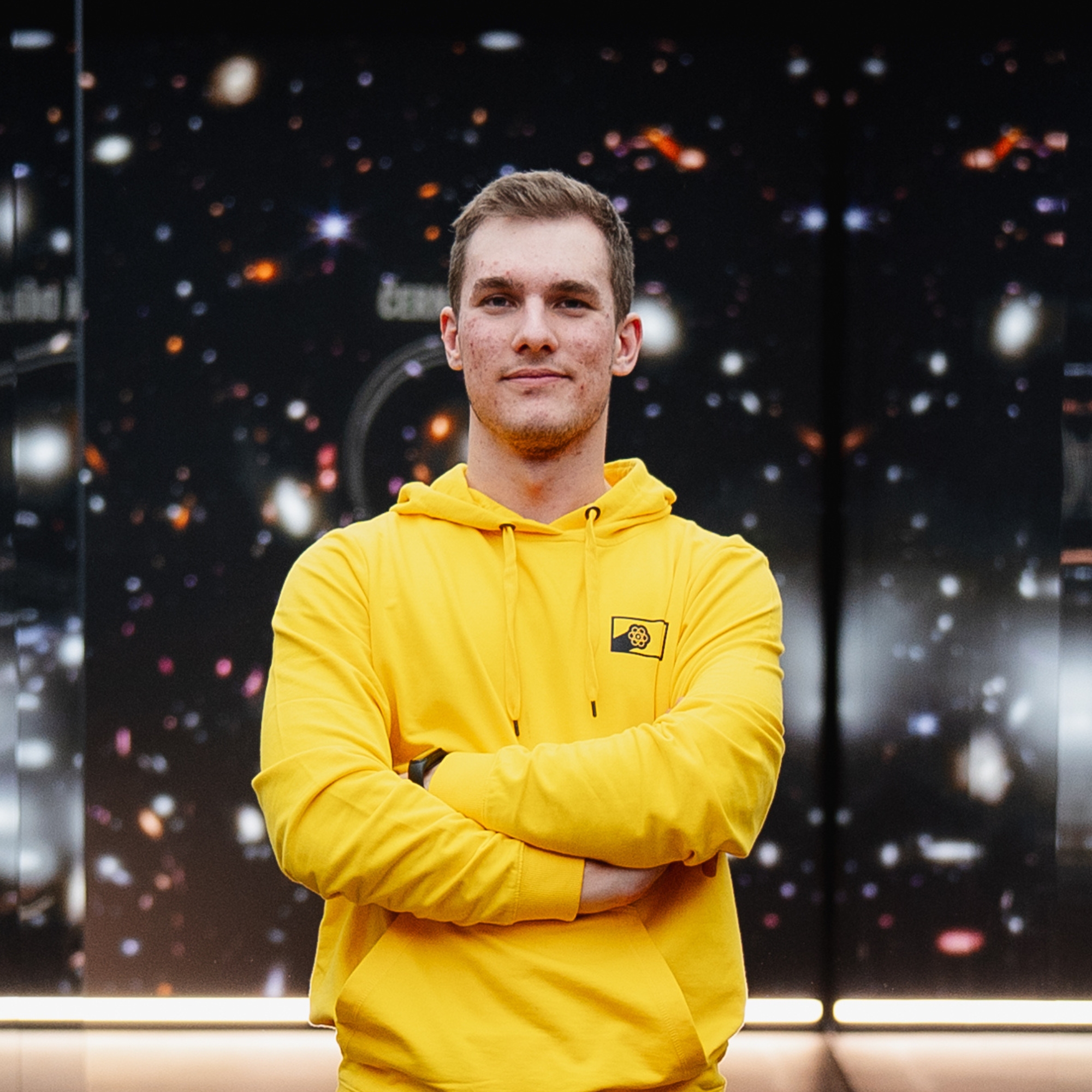 |
| Simon Klinga founded the LASAR project in 2023 at the age of 16 (Photo source: LASAR team archive) | Richard Nikel, one of the five founding members of the team |
Simon, the LASAR team is moving to Nová Zbrojovka. Before we talk about your plans here, could you briefly tell us what you’re currently working on?
Simon: We’re currently building our own laser and tracking system in the Czech Republic, and we’re preparing another satellite, which we plan to launch in 2029 or 2030. Our main headquarters is taking shape at Nová Zbrojovka, where we’ll coordinate the entire team as it gradually expands into the US as well. Our goal is to build the largest satellite operations control centre in the Czech Republic right here at Nová Zbrojovka – our very own Houston.
“Our main headquarters is taking shape at Nová Zbrojovka, from where we’ll manage the entire team.”
The LASAR team has recently achieved another major milestone: successfully targeting your satellite in orbit with a laser. What does this mean for you?
Richard: It’s a major milestone we’ve been working towards for a long time in collaboration with the European Space Agency (ESA). The laser pulse travelled hundrets of kilometres to the satellite, reflected off it and returned to Earth, where it was detected by the station’s detector. The station recorded 94 returns. It’s like hitting a five-koruna coin from a distance of roughly 100 kilometres. And precise targeting is one of the most important parts of our entire project. We need to be certain that the laser is pointing exactly where it should and won’t hit another satellite or any other object in space.
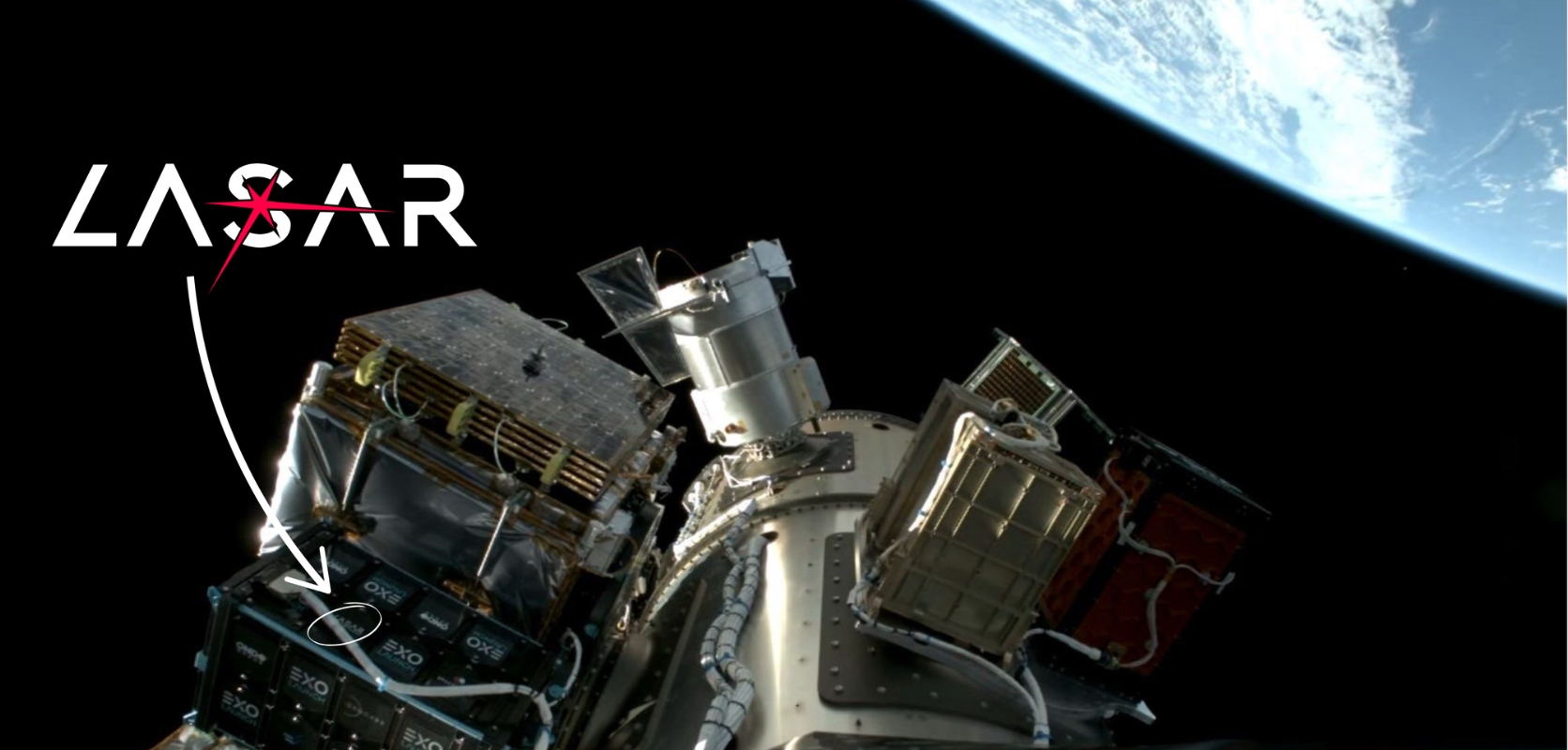 |
| The Nová Zbrojovka logo is set to reach orbit aboard the LASAR team’s next satellite, scheduled for launch between 2029 and 2030 |
What does working with ESA bring to your project, and how do you plan to build on this collaboration as you develop your own laser infrastructure in the Czech Republic?
Simon: We’re working with their team operating the Izaña-2 ground-based laser station on Tenerife in the Canary Islands. The station is used for highly precise laser ranging and tracking objects in orbit. Our goal now is to build similar infrastructure in the Czech Republic. We need our own facilities so that we can accurately target satellites and experiment with them safely. In the future, we want to use these technologies to track space debris more effectively and develop methods that could influence its trajectory and remove it from orbit.
What does the LASARsat satellite look like, and how long has it been in orbit?
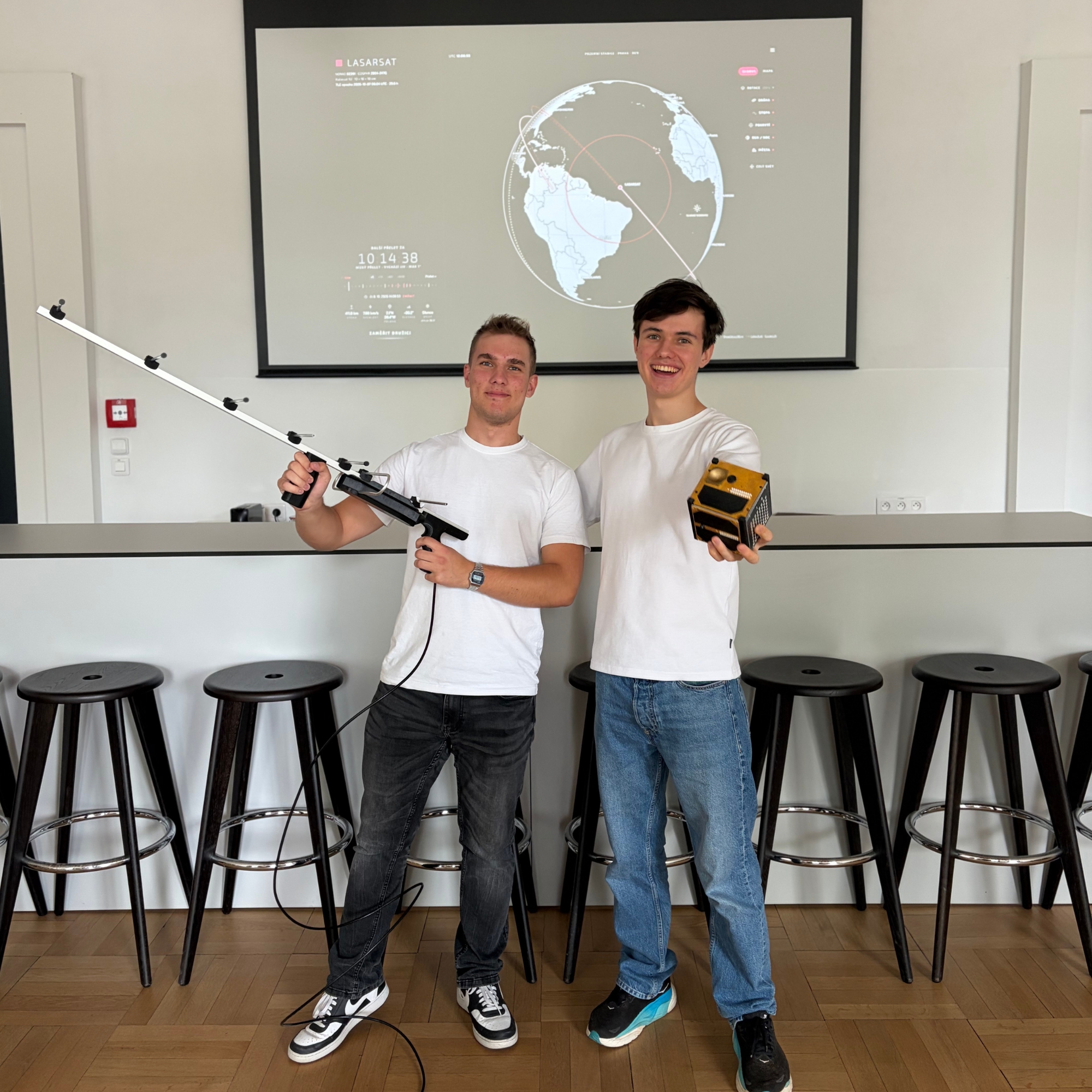
Richard: Our satellite has been operational in orbit for almost two years. It looks like a little cube, but there’s a lot packed inside. We’re running various experiments on board. It has a camera that takes pictures of Earth, so we’ve captured a series of fascinating images. This is the public outreach side of our mission: we’re showing that we can take pictures from a satellite and communicate with it. At the same time, the satellite allows us to gradually validate existing technologies and deploy new ones.
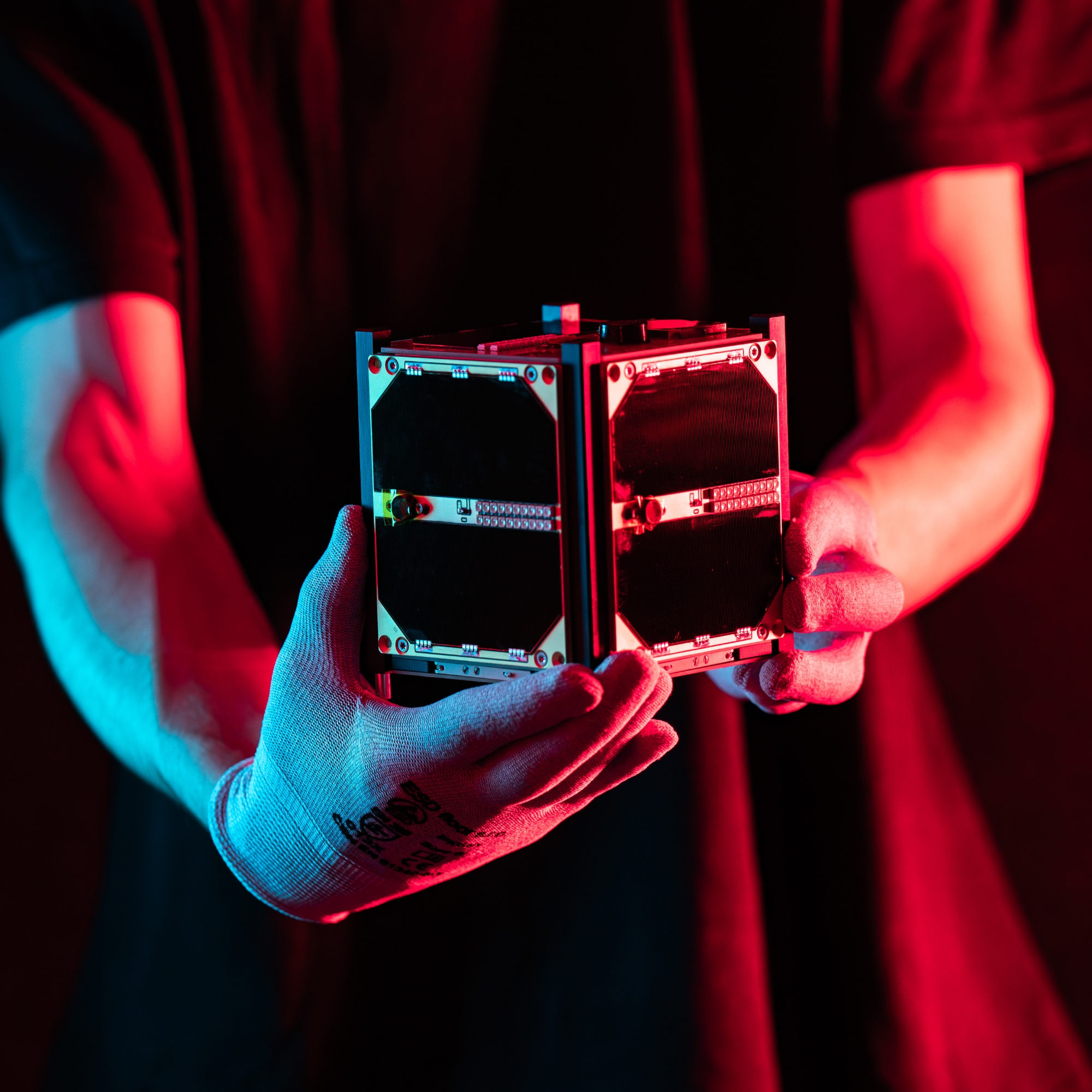 | 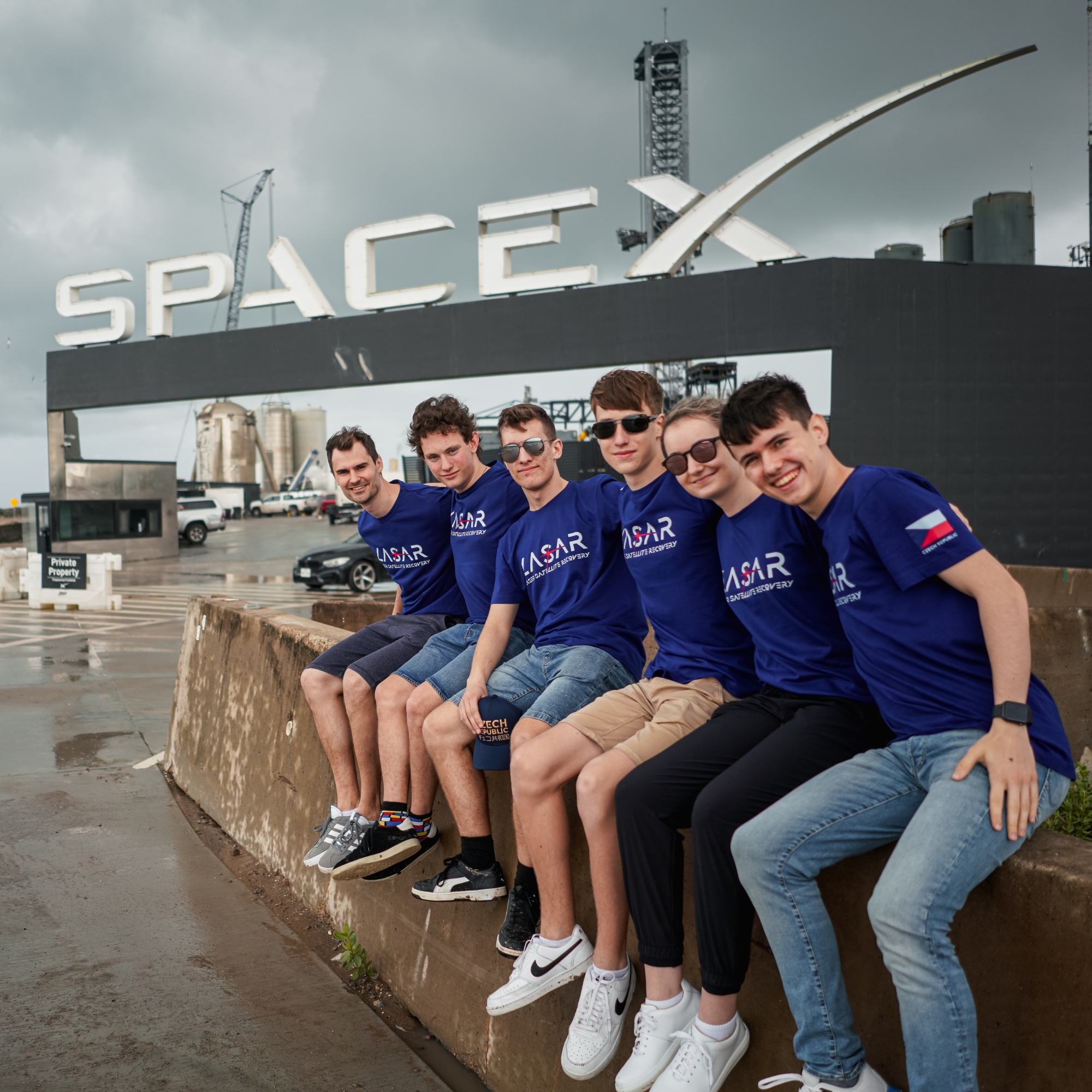 |
| LASARsat is a small cube that fits comfortably in the palm of your hand, yet it carries enormous potential on board | The LASAR team in front of the SpaceX offices in Houston, Texas. The team is now looking to expand at Nová Zbrojovka and attract professionals from the aerospace industry |
And what will you be working on in the Czech Republic now?
Simon: We’re building our own laser and tracking system. We’re working with the Teplice Observatory and the HiLASE laser centre in Dolní Břežany, near Prague. Their laser facilities are world-class, and that’s one of the reasons we decided to focus on using lasers to tackle the problem of space debris. From the very beginning, we wanted to build on existing expertise rather than develop something in isolation. The Czech Republic has a significant aerospace heritage, and we want to build on it and take it further.
What role will Nová Zbrojovka play in your plans for space?
Richard: We plan to build the largest satellite operations control centre in the Czech Republic here. It will cover around 100 square metres, but no one else in the country has a larger facility dedicated specifically to satellite operations. We want it to be the place from which we manage our space activities and develop the entire project. We’re already preparing for the launch of our next satellite, which we’re planning for 2029 or 2030.
Simon: We’ll manage the entire team from here. For now, we’re staying in temporary office space at Nová Zbrojovka’s Hrad, but in January we’ll move to ZET.Office and be fully operational there. There’s something symbolic about being based on Lazaretní Street, given that our project is called LASAR. Our core team will consist of around ten people. The wider team includes more than 30 people working remotely. We plan to gradually expand by bringing on board colleagues from the Czech Republic and abroad, and in the future, we want to establish another centre in the US. This is where we’ll carry out calculations, studies and other technical work.
“We plan to build the largest satellite operations control centre in the Czech Republic right here at Nová Zbrojovka. Our very own Houston.”
Are you planning to professionalise and expand your team?
Richard: Yes. We’re starting to reach out to people both in the Czech Republic and abroad. For example, we’re currently discussing a potential collaboration with a student at the prestigious MIT in the US. Our main focus needs to be on technical development, and we need to work as quickly and efficiently as possible. That’s why we’re launching targeted recruitment and approaching specific people we believe would be a good fit for our team. We’re looking for the best people, regardless of where they come from. The space industry is quite a specialised field, and there aren’t that many experts around, so our recruitment efforts are international.
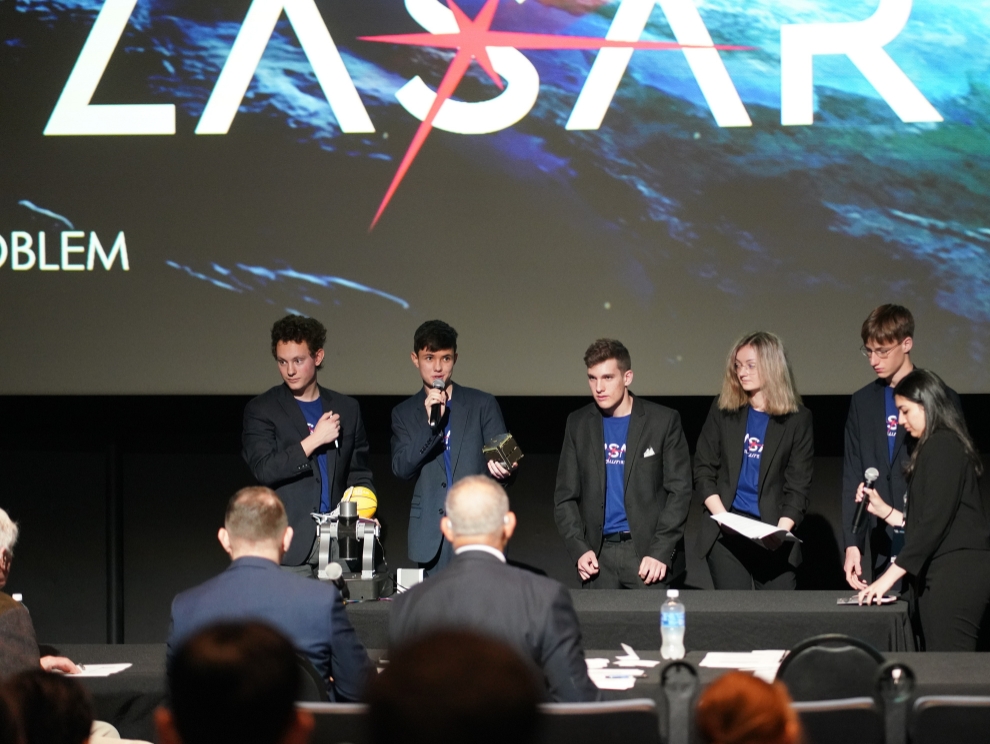 | 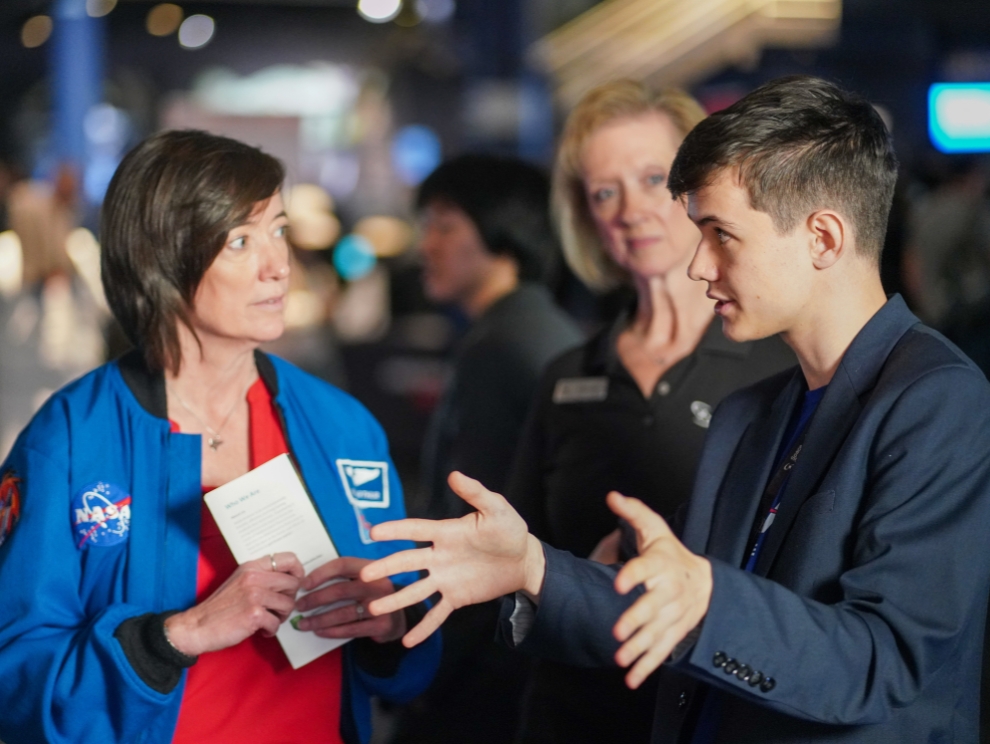 |
| The LASAR high school team presenting its project at the Conrad Challenge in Houston before an expert panel that included NASA employees | Simon Klinga discussing his project with NASA experts |
Why did you choose Nová Zbrojovka as your headquarters?
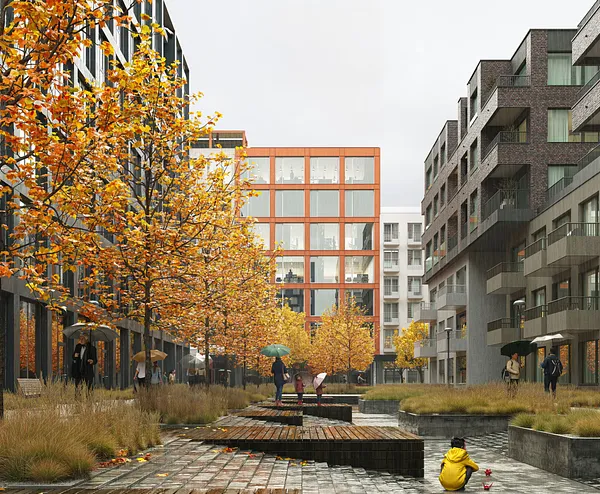
Simon: There are several reasons. Personally, I really like it here. I love watching the construction work, seeing new buildings go up and the whole area gradually evolve. It resonates with us because we’re constantly building and developing things ourselves. That’s why we like working in a place where old buildings are being brought back to life. I’m also a big fan of historic industrial architecture. I think Hala 76, for example, will be an epic venue for a modern, high-tech conference. Imagine announcing the latest space technologies and projecting the presentation onto a historic brick wall. I love that contrast, and I also see a parallel with the development of our team and the entire industry.
How do you see that parallel?
Simon: It’s reflected in the whole story of aerospace. Humanity landed on the Moon more than 50 years ago. Then came a period of slowdown, when space exploration wasn’t advancing as quickly in some areas. Today, new technologies are opening up fresh opportunities to push the boundaries of what we can do. That’s exactly what the LASAR team is all about, too. We want to help develop the ability to precisely target objects in space with lasers and protect Earth’s orbit from space debris.
And Nová Zbrojovka has a similar story. There used to be a successful factory here, then came a period of decline after it closed, and now a modern urban district is taking shape. Things are being built, developed and brought back to life once again. That really resonates with us.
How did the partnership that will take Nová Zbrojovka into orbit actually come about?
Simon: The Nová Zbrojovka logo will travel into space aboard our next satellite in 2029 or 2030. And how did it all start? Quite spontaneously, actually. Mirek Pekník, the director of Nová Zbrojovka, invited me into the V ODZBROJENÍ podcast. Among other things, he asked about our plans and whether we were already looking for our own premises. At the time, I was still spending six months in the US, so it wasn’t something we were actively dealing with. But when I returned, we started looking for space and considering Nová Zbrojovka. Brno made sense to us, especially with the excellent Brno University of Technology (BUT), which is important for a technically focused team like ours.
I emailed Mr Pekník with a simple proposition: “We’ll send Nová Zbrojovka into space. And we need an office.” He called me about ten minutes later and said, “Deal.”And that’s how it all happened (laughs). We started discussing a partnership and eventually agreed that the Nová Zbrojovka logo really would be sent among the stars.
“We’ll send Nová Zbrojovka among the stars. Its logo will travel into space aboard our next satellite in 2029 or 2030.”
 | 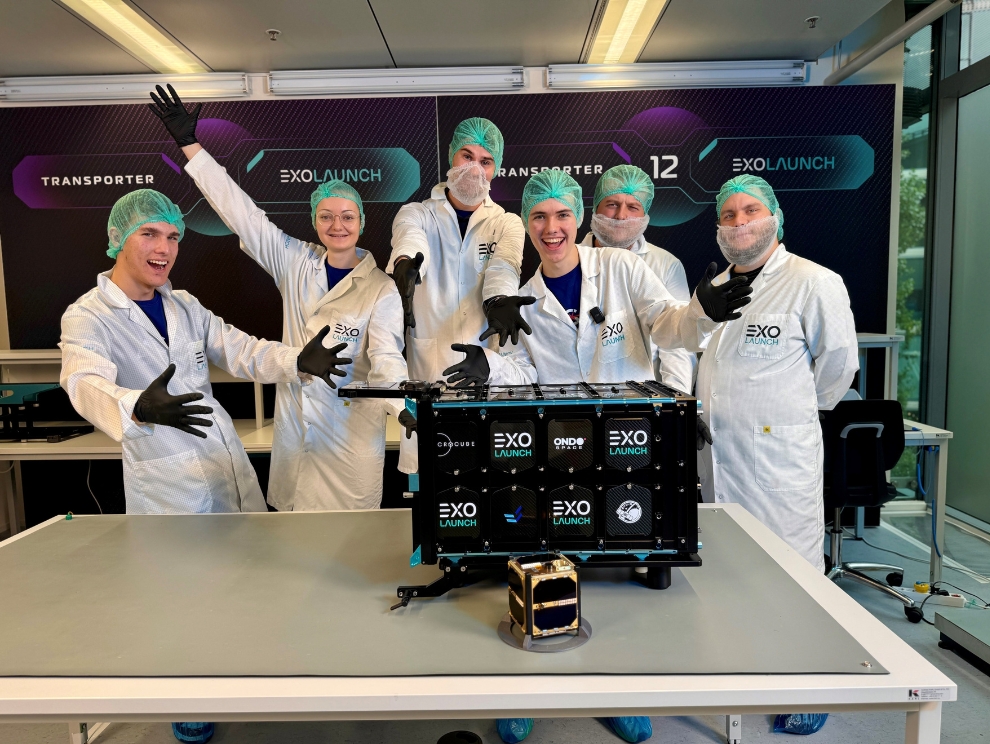 |
At the end of 2024, a SpaceX Falcon 9 rocket carried LASARsat, the first Czech student-built satellite, into orbit | The LASAR team hands over its satellite for integration with the Falcon 9 rocket |
What do you like about Nová Zbrojovka?
Richard: The accessibility is great. Public transport, trams, the railway station – everything is just around the corner. I like the idea of developing Nová Zbrojovka as a a 15-minute neighbourhood where everything is within a few minutes’ walk. It’s close to the city centre without being right in the middle of it. The surroundings are a little quieter, yet there’s plenty of space and lots of possibilities. I also like the overall masterplan. There are so many things still to come, and I think it will work really well for young people starting their careers as well as for families with children.
Simon: The combination of offices and housing is great. There are already services here that we use, such as the gym at ZET.Office, restaurants and cafés, and more are on the way. I also like the way industrial heritage is being combined with modern architecture. Take the historic Boiler House, for example. It’s being preserved and transformed into a modern hub, which is mega cool. It reminds me of Austin or San Francisco in the US. Both cities have a rich history and a vibrant arts scene, yet they’re constantly reinventing themselves. And ZET.Office has a rooftop terrace, which is perfect for us. We can set up our antennas there and receive signals from our satellite (laughs).
And what do you like about this combination of offices and housing? What makes it such a good fit for the younger generation?
Richard: For our generation, it’s an ideal combination. We save a lot of time commuting and don’t have to keep travelling between work and home. I also believe we can build a great community here. It could work like an incubator. What’s important is that the housing and offices are being planned together from the very beginning, with the whole environment designed around that idea. It’s not just another housing estate where people only start thinking about how to bring the community together afterwards.
“Combining offices and housing is an ideal setup for young proffesionals starting their careers.”
 |  |
| Until January, the LASAR team will be based in temporary offices at Nová Zbrojovka’s Hrad site before moving to ZET.Office | The younger generation welcomes the idea of living close to work. At Nová Zbrojovka, everything they need is just a few minutes’ walk away – from shops and everyday services to sports, entertainment, dining and educational events |
Have you already thought about buying or finding a place of your own here?
Simon: I honestly don’t have time to think about that right now. It’s not a priority for me at the moment.
Richard: I started studying at Brno University of Technology in September, and for now I’m living with my parents just outside Brno, so we’ll see. Moving to Nová Zbrojovka would obviously make sense – I’d be just a few minutes away from work. The question is whether it would be financially sustainable. So, we’ll see.